Domande Essenziali nella Vita Quotidiana in Italiano
Quando si impara l’italiano per la vita quotidiana, padroneggiare le domande essenziali è uno dei modi più rapidi per parlare con sicurezza e ottenere informazioni utili. Le domande brevi e frequenti coprono quasi tutte le interazioni di base: presentarsi, chiedere indicazioni, ordinare al ristorante, fare acquisti e organizzare appuntamenti.
Personal and Social Questions
Queste sono le prime domande che servono per rompere il ghiaccio in una conversazione. In italiano, molte risposte richiedono poca grammatica, quindi sono ideali per iniziare a parlare subito.
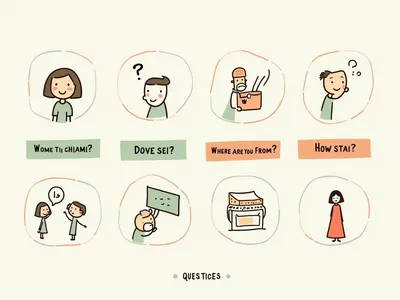
- Come ti chiami? – What’s your name?
- Di dove sei? – Where are you from?
- Quanti anni hai? – How old are you? (Be mindful, as asking someone’s age can be sensitive.)
- Come stai? – How are you?
- Che lavoro fai? – What do you do for work?
- Hai fratelli o sorelle? – Do you have brothers or sisters?
In contesti informali, tu è la forma normale: Come ti chiami? e Come stai? suonano naturali tra coetanei, amici e persone che si stanno appena conoscendo in modo amichevole. Con persone sconosciute, in ambienti professionali o quando si vuole mantenere distanza, la forma di cortesia usa Lei: Come si chiama? e Come sta?.
Una domanda come Che lavoro fai? è molto comune, ma non sempre la più adatta al primo incontro. In italiano, il lavoro è spesso un argomento da conversazione sociale, però il contesto conta: in alcuni ambienti può sembrare troppo diretto se non c’è già un minimo di confidenza.
Travel and Navigation
Le domande di viaggio sono tra le più pratiche perché permettono di risolvere problemi immediati senza frasi complesse. Sono anche fra le prime che un parlante italiano capisce bene, perché in città, stazioni e hotel si ripetono di continuo.
- Dove si trova il bagno? – Where is the bathroom?
- Quanto costa? – How much does it cost?
- Come arrivo a [Piazza della Repubblica]? – How do I get to [Piazza della Repubblica]?
- Quando parte l’ultimo autobus? – When does the last bus leave?
Dove si trova… è utile perché suona più naturale di una traduzione letterale tipo “Where is…?” in molti contesti. In italiano la struttura con si trova è comune quando si chiede la posizione di un luogo o di un servizio. Per esempio, Dove si trova la stazione? è perfettamente normale.
Quando si chiede un percorso, è utile aggiungere un punto di riferimento preciso: una piazza, una via, un museo o una stazione. In Italia, nomi di luoghi come Piazza della Repubblica, Via Roma o Stazione Centrale aiutano molto più di indicazioni vaghe.
Per i trasporti, Quando parte l’ultimo autobus? è una domanda concreta e quotidiana. In molte città italiane, gli orari dei mezzi possono variare la sera, nei weekend e nei giorni festivi, quindi chiedere l’orario dell’ultimo mezzo è spesso più utile che chiedere soltanto “the bus”.
Shopping and Dining
Nei negozi e nei ristoranti, le domande brevi sono spesso le più efficaci. Servono a chiedere prezzi, quantità, consigli e disponibilità senza interrompere il ritmo del servizio.
- Quanto costa questo? – How much is this?
- Mi può aiutare? – Can you help me?
- Posso avere il menu, per favore? – Can I have the menu, please?
- Cosa mi consiglia? – What do you recommend?
Mi può aiutare? è una formula molto utile perché funziona in tante situazioni: in un negozio, in hotel, in stazione o in una farmacia. La forma può indica cortesia, quindi è più adatta di puoi con persone che non si conoscono bene.
Al ristorante, Posso avere il menu, per favore? è più naturale di una richiesta troppo diretta. In Italia, il per favore rende la frase più fluida, e spesso anche un semplice Il menu, per favore basta in contesti informali o veloci.
La domanda Cosa mi consiglia? è preziosa perché invita l’altra persona a partecipare alla scelta. Funziona bene con camerieri, commessi e specialisti di prodotto. In un’enoteca, in una gelateria o in una trattoria, chiedere un consiglio spesso produce risposte più utili di una domanda generica.
Everyday Situations
Le domande di uso quotidiano aiutano a mantenere viva la conversazione e a reagire a ciò che succede intorno. Sono semplici, ma coprono momenti molto frequenti della giornata.
- Che ora è? – What time is it?
- Cos’è questo? – What’s this?
- Dove sei andato ieri? – Where did you go yesterday?
- Perché sei triste? – Why are you sad?
Che ora è? è una delle prime domande pratiche da imparare perché serve ovunque. In italiano si può anche sentire Che ore sono?, che è molto comune e spesso più naturale nella lingua parlata.
Cos’è questo? è utile quando si vuole identificare un oggetto, un alimento o un elemento del contesto. Nella lingua quotidiana, questa domanda appare spesso in situazioni reali: al mercato, in casa, durante una lezione o mentre si mostra qualcosa a qualcun altro.
Le domande con perché permettono di andare oltre la semplice interazione funzionale. Perché sei triste? mostra interesse per lo stato emotivo dell’altra persona, e in italiano il tono conta molto: una domanda sincera e calma risulta più naturale di una formulazione troppo diretta.
Making Plans and Preferences
Le domande su preferenze e abitudini sono fondamentali perché trasformano una conversazione da scambio di informazioni a scambio personale. Sono particolarmente utili per fare amicizia, organizzare uscite o parlare di tempo libero.
- Cosa fai nel fine settimana? – What do you do on weekends?
- Ti piace [la pizza]? – Do you like [pizza]?
- Quale preferisci? – Which one do you prefer?
Ti piace… è una struttura essenziale perché si adatta a quasi tutto: cibo, attività, musica, città, film e sport. Per esempio, Ti piace il caffè?, Ti piace Roma? e Ti piace viaggiare? sono domande semplici ma molto produttive.
Quale preferisci? è utile quando ci sono due o più opzioni. In negozio, al bar o tra amici, permette di scegliere rapidamente senza bisogno di spiegazioni lunghe. Se il confronto è tra oggetti simili, questa domanda è spesso più precisa di Che cosa vuoi?.
Basic Question Words
Queste parole sono indispensabili per formare domande e adattarle a quasi ogni situazione. Conoscere i singoli interrogativi aiuta a creare nuove frasi anche quando non si è memorizzata la domanda completa.
- Chi (Who?)
Example: Chi è lui? – Who is he? - Che/Cosa/Che cosa (What?)
Example: Che cosa fai? – What are you doing? - Dove (Where?)
Example: Dove abiti? – Where do you live? - Quando (When?)
Example: Quando torni in Italia? – When are you coming back to Italy? - Perché (Why?)
Example: Perché studi italiano? – Why are you studying Italian? - Come (How?)
Example: Come si pronuncia il tuo nome? – How do you pronounce your name? - Quanto/a/i/e (How much/many?)
Example: Quanti gatti hai? – How many cats do you have?
In italiano, che, cosa e che cosa possono funzionare in modo simile, ma il tono cambia leggermente. Che fai? è molto colloquiale, Cosa fai? è neutro, mentre Che cosa fai? suona spesso un po’ più esplicito e completo. Tutte e tre le forme sono corrette.
L’accordo di quanto cambia con il nome a cui si riferisce: quanto libro, quanta acqua, quanti libri, quante persone. Questo dettaglio è importante perché la domanda corretta aiuta anche a usare la risposta corretta.
Pronunciation and Politeness
In italiano, una domanda utile non dipende solo dalle parole, ma anche da pronuncia e cortesia. Un’interrogativa chiara, con ritmo naturale e intonazione ascendente alla fine, è spesso più comprensibile di una frase perfetta ma esitante.
Le sillabe finali contano molto. Ci-ào, co-me, quan-to, do-ve e per-ché devono restare distinte, senza ingoiare vocali. Anche una buona pronuncia delle doppie consonanti fa differenza: sorelle non suona come sorele, e quanti non va confuso con canti.
Parole come per favore, grazie e scusi cambiano il tono di una richiesta. Scusi, dov’è il bagno? è una formula molto più naturale in un luogo pubblico rispetto a una domanda secca. In molte situazioni quotidiane italiane, la forma cortese vale più della lunghezza della frase.
Common Mistakes
Uno degli errori più frequenti è usare sempre la forma informale tu con sconosciuti, personale di servizio o persone più anziane. In caso di dubbio, la cortesia con Lei è la scelta più sicura.
Un altro errore comune è tradurre letteralmente dall’inglese o da altre lingue. Per esempio, in italiano Come si chiama? è più naturale di una struttura troppo diretta senza verbo riflessivo. Allo stesso modo, Dove si trova…? è spesso la domanda più idiomatica per chiedere una posizione.
Anche l’ordine delle parole può creare confusione. Nelle domande italiane, l’interrogativo viene di solito all’inizio: Dove vai?, Quando arriva il treno?, Quanto costa?. Imparare questi schemi fissi è più utile che memorizzare regole astratte.
How to Use These Questions in Real Conversations
Le domande essenziali funzionano meglio quando sono praticate in contesti realistici: presentazioni, acquisti, ordinazioni, indicazioni stradali e piccole conversazioni quotidiane. Le frasi brevi sono facili da ricordare, ma diventano davvero utili solo quando si riesce a riconoscerle e rispondere senza tradurle mentalmente parola per parola.
Un approccio efficace è raggruppare le domande per situazione. Le domande sociali servono per iniziare, quelle di viaggio per orientarsi, quelle di shopping e ristorazione per gestire il servizio, e quelle di preferenza per continuare la conversazione. Questo tipo di pratica attiva accelera il passaggio dal riconoscimento passivo all’uso spontaneo.
Quick Reference: The Most Useful Questions
- Come ti chiami? – What’s your name?
- Come stai? – How are you?
- Dove si trova…? – Where is…?
- Quanto costa? – How much does it cost?
- Mi può aiutare? – Can you help me?
- Che ora è? – What time is it?
- Ti piace…? – Do you like…?
- Quale preferisci? – Which one do you prefer?
Con queste domande, molte interazioni quotidiane in italiano diventano gestibili anche con un vocabolario limitato. Le frasi sono brevi, concrete e facili da riutilizzare in contesti diversi, che si tratti di viaggio, socializzazione o attività di ogni giorno.
References
-
8 Italian Question Words Every Beginner Should Know - Lingopie
-
300 Basic Italian Questions for Everyday Conversations - YouTube
-
Learn Italian ! A chart with the Italian most essential questions …
-
Learn Italian: Essential ‘What’ Questions for Beginners | TikTok
-
Italian Basic Questions: Phrases & Pronunciation - StudySmarter
-
300+ Most Important Italian Questions for Daily Use … - YouTube
-
Italian Beginners – practice speaking questions - Education NSW
-
16 Italian question words to master to ask questions in Italian - Berlitz