How can I avoid false friends when learning German
How can I avoid false friends when learning German
False friends are easiest to avoid by learning the most common ones early, checking meaning in context, and never assuming a word means what it resembles in English. In German, a handful of lookalike words cause a disproportionate number of misunderstandings, so building a small habit of verification saves time and prevents embarrassing mistakes.
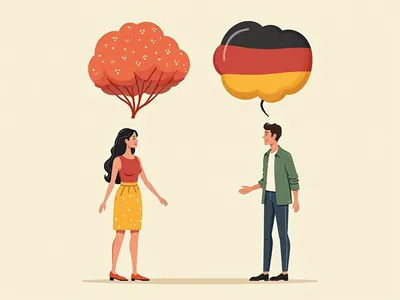
A false friend is a word that looks or sounds similar in two languages but has a different meaning. Some are only slightly different, while others are completely unrelated in meaning, which is why they can mislead even intermediate learners.
- Be aware that false friends are words in German and English that look or sound similar but have different meanings, which often causes misunderstandings.
The most useful false friends to learn first
The fastest way to reduce errors is to memorize a short list of high-frequency false friends and review them until the correct meaning feels automatic.
- German “Gift” means “poison,” not a present.
- German “bekommen” means “to receive,” not “to become.”
- German “rat” means “advice,” not a rodent.
A few more common examples help show the pattern:
- der Chef means “boss,” not “chef” in the English cooking sense.
- das Fabrikat means “make” or “brand,” not “fabric.”
- aktuell means “current,” not “actual.”
- eventuell means “possibly” or “perhaps,” not “eventually.”
- sensibel means “sensitive,” not “sensible.”
- die Fabrik means “factory,” not “fabric.”
These pairs are especially useful because they appear in everyday reading, product labels, announcements, and casual conversation.
Learn false friends in context
Memorizing a translation is not enough if the word appears in a phrase that changes its meaning or grammatical role. Context reveals whether a word behaves like a noun, verb, adjective, or false cognate, and that often clarifies meaning faster than dictionary translation alone.
- Learn false friends in context rather than in isolation to understand how they are used in sentences.
For example, bekommen becomes much easier to remember in a sentence such as Ich bekomme eine E-Mail (“I receive an email”). The word Gift is also clearer in a sentence like Das ist giftig (“That is poisonous”), which makes the toxic meaning impossible to miss.
A useful pattern is to record the full phrase, not just the single word. A note like aktuell = current, as in aktuelle Nachrichten is more memorable than a bare word list.
Compare German words with English carefully
Many false friend mistakes happen because a learner recognizes a familiar shape and stops checking meaning too early. A safer habit is to pause whenever a German word looks “obvious” and verify whether the similarity is real or deceptive.
When studying new vocabulary, watch especially for:
- words with the same spelling but different meaning
- words with nearly identical spelling
- words that seem to match an English meaning perfectly
- words borrowed from Latin that evolved differently in each language
This matters because German and English share many roots, but shared history does not guarantee shared meaning. Some words are close enough to tempt a quick guess, but different enough to create a serious misunderstanding in a conversation, message, or exam answer.
Use dictionaries and learning resources that flag false friends
A good learner’s dictionary does more than give a translation; it also shows usage labels, example sentences, and meaning distinctions. Resources that explicitly warn about false friends are especially valuable because they help separate the main meaning from the misleading one.
When a word seems suspiciously familiar, check:
- its core definition
- example sentences
- part of speech
- common collocations
- whether the dictionary lists an English “lookalike” meaning that is wrong
This is particularly important for verbs, since a mistaken verb choice can change the whole meaning of a sentence. For instance, confusing bekommen with “become” may produce a sentence that sounds plausible in English logic but is wrong in German.
Build an active memory, not just recognition
False friends are often recognized on a page long before they are remembered in real use. Active recall helps turn passive familiarity into reliable knowledge.
Useful methods include:
- making flashcards with the German word on one side and the correct meaning on the other
- adding a short example sentence to each card
- grouping false friends by type, such as nouns, verbs, or adjectives
- revisiting the same items in spaced intervals
- saying the word in a sentence aloud to strengthen recall
Speaking the word in context is especially effective because pronunciation, meaning, and sentence pattern become linked together. In language learning, active conversation practice usually reveals false friend errors sooner than passive reading alone.
Read and listen to authentic German
Authentic input shows how native speakers actually use a word, which is often more memorable than a definition. The more often a false friend appears in real sentences, the easier it is to separate the German meaning from the English one.
Good sources include:
- news headlines
- short articles
- subtitles
- podcast transcripts
- everyday dialogs
- product descriptions and signs
For example, seeing aktuell in aktuelle Informationen repeatedly makes its meaning “current” feel natural. Hearing eventuell in spoken German also helps prevent the common error of assuming it means “eventually.”
Common traps and how to avoid them
Some false friend errors are especially common because the English guess feels so plausible.
1. Translating word for word
Literal translation is one of the biggest causes of false friend mistakes. A German sentence may contain a familiar-looking word, but the correct English equivalent depends on the actual German meaning, not the visual similarity.
2. Trusting cognates too quickly
Cognates are useful, but they should always be verified. Similar spelling is a clue, not proof.
3. Learning only single words
Single-word study encourages guessing. Full phrases reduce ambiguity and show the word’s real behavior.
4. Ignoring part of speech
A noun that resembles an English noun may still mean something very different, and a verb may appear to line up with a familiar English verb when it does not.
A practical way to study false friends
A simple weekly routine works well:
- Collect five to ten false friends.
- Write the correct German meaning and a short example sentence.
- Add one English reminder that prevents the wrong association.
- Review them in a different context a few days later.
- Use them in speaking or writing as soon as possible.
This approach is efficient because it turns false friends into a small, manageable vocabulary category instead of a constant source of surprise.
Why false friends matter in real communication
False friends do more than cause small vocabulary errors. They can change the meaning of an entire conversation, especially when the topic involves work, schedules, health, or instructions. A mistaken word can make a sentence sound strange, or worse, convey the opposite of what was intended.
For learners, the goal is not to memorize every possible trap at once. The goal is to notice the pattern, verify suspicious words, and build the habit of checking meaning before guessing. That habit steadily improves reading accuracy, listening comprehension, and speaking confidence.
These tips help language learners minimize errors caused by assuming that similarly looking words in German and English share the same meaning, improving comprehension and communication accuracy.
References
-
How Long Will You Love Being “Upright”? The Danger of False Friends in Translation
-
Machine Learning in Measurement Part 1: Error Contribution and Terminology Confusion
-
Partial false friends in English - Turkish translations: diplomatic texts