Are there any specific Chinese characters that frequently cause confusion with English words
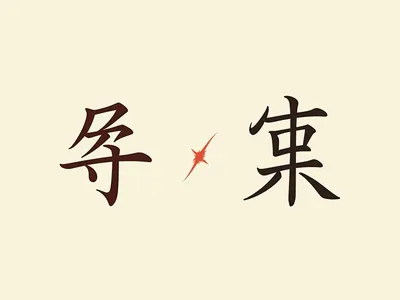
Yes. The Chinese characters that most often confuse English learners are usually pairs or small groups that look nearly identical at a glance, especially when a single stroke, dot, or stroke angle changes the meaning. The confusion is rarely about a Chinese character “looking like” an English word; it is usually about two Chinese characters that are easy to mix up visually.
The most commonly confused character pairs
A few sets appear again and again in beginner materials because they differ by only one detail:
- 土 (tǔ, meaning “soil”) vs. 士 (shì, meaning “scholar”): The difference lies in the length of the horizontal strokes.
- 犬 (quǎn, “dog”) vs. 太 (tài, “too” or “very”): 犬 has a more angular shape, while 太 includes a small dot radical above.
- 王 (wáng, “king”) vs. 主 (zhǔ, “master”): 主 has an additional dot on top.
- 人 (rén, “person”) vs. 入 (rù, “enter”) which look very similar but have slight stroke angle differences.
- 大 (dà, “big”) vs. 太 (tài, “too”) vs. 犬 (quǎn, “dog”): These three characters are visually similar but distinct in stroke placement.
These characters are confusing because the difference is small enough to disappear in handwriting, low-resolution screens, or fast note-taking. In printed text, the distinction is usually clear; in practice, the problem is recognizing the exact form under time pressure.
Other frequent lookalike sets
Other commonly confused sets include characters that share radicals but differ by one or two strokes, such as 未 (wèi) vs. 末 (mò), or characters with similar components like 学 (xué, “to study”) vs. 字 (zì, “character”).
A few more examples that often trouble learners:
- 口 and 日: both are box-like, but 日 has an internal horizontal stroke.
- 木, 本, and 术: all share a tree-like structure, but the extra stroke changes the meaning.
- 目 and 日: both are rectangular, but 目 is taller and usually has more interior space.
- 已, 己, and 巳: these three are especially easy to mix up because they differ only in the position and closure of the lower part.
- 刀 and 力: both are compact and slanted, but 刀 has a hooked form while 力 is more open.
- 牛 and 午: both can look similar in simplified form, but the crossing strokes are arranged differently.
The most error-prone characters are often not the ones that look ornate. They are the ones built from very common shapes: one horizontal line, one vertical line, a dot, or a small hook.
Why English learners confuse them
These small visual differences can cause confusion for learners because Chinese characters do not use an alphabet and pronunciation clues are limited. Learning to distinguish by paying attention to radicals, stroke order, and context is key to avoiding mix-ups. 2, 5, 6
That point matters because Chinese writing is built from morphemes and character components, not from letter-to-sound conversion in the way English spelling works. A learner cannot usually decode an unfamiliar character by “sounding it out” with confidence, so shape recognition becomes essential.
There are three main reasons confusion happens:
- Characters are dense with information. A single stroke can change both meaning and pronunciation.
- Many characters share the same components. Similar radicals create similar outlines.
- Handwriting compresses differences. When written quickly, a dot may shrink, a stroke may shorten, or an angle may flatten.
For speaking, this visual confusion can still matter indirectly. Learners who combine reading practice with active conversation practice tend to notice character distinctions more reliably, because the character, pronunciation, and meaning are reinforced together rather than studied in isolation.
How to tell lookalike characters apart
The most reliable method is to focus on the smallest stable difference rather than on the overall “shape.”
1. Learn the key stroke difference
For many pairs, one stroke is enough to identify the character:
- 土 has a longer top line than 士.
- 王 lacks the top dot that 主 has.
- 人 opens wider at the bottom than 入.
2. Learn the component or radical
Many confusing characters are easier to remember when broken into parts:
- 未 and 末 both contain a “tree-like” structure, but the top and bottom positions differ.
- 学 and 字 both begin with a roof-like upper section, but the lower components are different.
3. Use meaning as a memory hook
Meaning often provides a useful anchor:
- 王 is associated with “king,” a broad and stable concept.
- 主 means “master” or “main,” and the small top dot helps distinguish it visually.
4. Practice recognition in context
Characters are easier to remember in real words than as isolated symbols:
- 王国, 主人, 大人, 人工, 出入, 土地
Seeing the character inside a common word reduces the chance of mixing it up with a visually similar form.
Common mistakes learners make
The most common mistake is assuming that similar-looking characters are interchangeable. They are not. In Chinese, a one-stroke difference can change a word completely.
Another common error is over-relying on English-language mnemonic tricks that focus only on appearance. Visual mnemonics can help, but they are strongest when paired with pronunciation and usage. A character remembered only as “the one with the dot” is easy to forget if it is not also tied to a real word or phrase.
A third mistake is reading too quickly and treating characters like Latin letters. Chinese characters are not built for rapid alphabetic scanning. Slowing down at the level of radicals and stroke features is often more effective than trying to “guess the word from the outline.”
What matters most for learners
The best strategy is usually a three-part habit:
- Notice the smallest visual difference
- Associate it with meaning and pronunciation
- Reinforce it in real words and sentences
That approach is especially useful for characters that differ by only one stroke, such as 王 and 主 or 土 and 士. Over time, these pairs stop feeling arbitrary and start becoming distinct visual objects with their own meanings.
Quick answer
The Chinese characters that most often confuse English learners are lookalike pairs such as 土 and 士, 王 and 主, 人 and 入, and 未 and 末. The confusion comes from tiny stroke differences, shared components, and the fact that Chinese characters cannot usually be decoded by alphabetic sounding-out.