Are there any funny stories about using false friends in French
Yes, there are some funny stories about using false friends in French, as they often lead to humorous misunderstandings. Here are a couple of examples:
-
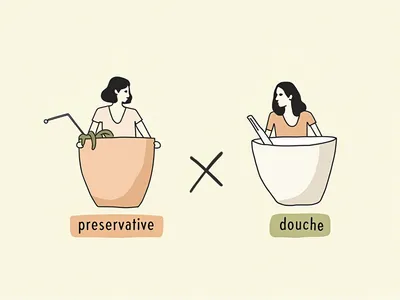
Preservative vs. Préservatif: One of the most well-known and embarrassing false friends is the word “preservative.” In English, it refers to substances added to food to prevent spoilage. However, in French, “préservatif” means condom. For instance, one student in a French class wanted to say he was making a sandwich and needed jelly (which is “confiture” in French). Instead, he used the word “preservative,” effectively asking for a “condom sandwich.” This mistake caused laughter among classmates and the teacher 3.
-
Douche: In English, “douche” is often used as an insult, but in French, it simply means “shower.” Imagine someone trying to use this word as an insult in France—it would confuse the listener entirely since they would think the person is talking about taking a shower! This mix-up highlights how false friends can lead to amusing situations 4.
These examples show how language learners can unintentionally create hilarious moments when grappling with false friends in French and English.
What Makes False Friends in French So Tricky?
False friends are pairs of words in two languages that look or sound similar but differ significantly in meaning. In French and English, this happens frequently due to their shared Latin roots and centuries of cross-linguistic influence. The similarity in appearance tempts learners to assume their meanings match, often resulting in funny or confusing situations.
For example, the English word “library” looks similar to the French “librairie,” but while “library” means a place to borrow books, “librairie” means bookstore. A learner asking for a library in France by saying “Je cherche une librairie” may end up in a bookstore instead, which can be an amusing mix-up.
More Funny French-English False Friends and Their Pitfalls
-
Actuellement vs. Actually: “Actuellement” means “currently” or “at present,” not “actually.” Saying “Actuellement, je suis fatigué” means “Currently, I am tired,” but confusing it with “actually” might make the statement unclear or humorous.
-
Sensible vs. Sensible: In English, “sensible” means reasonable or practical, but the French “sensible” means sensitive or emotional. So, calling someone “sensible” in French implies they are easily affected emotionally, which may surprise English speakers new to French.
-
Monnaie vs. Money: “Monnaie” refers specifically to change or coins, not money in general. Asking for “la monnaie” at a shop means you want change returned, not money to pay with. This subtle difference can cause momentary confusion.
How Pronunciation Can Amplify Confusion
Sometimes false friends sound alike but their slightly different pronunciation tips off native listeners, which adds to the humor or awkwardness. For example:
-
The English “déception” (disappointment) and the French “déception” are false friends in meaning, but they are pronounced differently. Non-native French speakers may pronounce it like English and confuse meaning, causing funny misunderstandings in conversation.
-
The English loanword “comité” and the French “comité” (committee) sound similar, but learners miss subtle stress differences that indicate meaning shifts in phrases, occasionally leading to comic miscommunication.
Cultural Context: Why Do These Moments Matter?
Using false friends incorrectly can often break the ice and create memorable conversations, especially when language learners share their awkward or funny errors. These shared experiences can ease anxiety around speaking, making learners more confident and engaged.
For example, the “préservatif” story is so common it has become almost a running joke in French classrooms worldwide, reminding learners that mistakes are part of the journey and often the funniest moments.
Tips to Handle False Friends in French Conversation
-
Learn False Friends as a Group: Memorizing common false friends together helps anticipate pitfalls and reduces embarrassment.
-
Focus on Real-World Usage: Listening to native conversations or AI tutor simulations can highlight in-context meanings of tricky words better than dictionaries alone.
-
Practice Active Correction: When a false friend mistake happens, understanding why it occurred and replacing it with the correct word helps internalize proper usage.
-
Ask for Clarification: If unsure whether a word is correct, directly clarifying during conversation prevents misunderstandings, especially with false friends that can cause unintended offense.
FAQ: False Friends and French Usage
Q: Are there false friends between French and other languages besides English?
Yes, French shares false friends with many Romance languages like Spanish and Italian. For instance, “embarazada” in Spanish means “pregnant,” not embarrassed, which can confuse French speakers learning Spanish.
Q: Can context usually prevent confusion caused by false friends?
Often yes, context helps signal the intended meaning, but some false friends, especially taboo or culturally sensitive words like “préservatif,” can cause unexpected awkwardness even with context.
Q: Are false friends more common at beginner or intermediate levels?
Beginners are more prone to false friend mistakes because they rely heavily on word appearance and sound. Intermediate learners start catching these subtleties through exposure and practice.
By understanding French-English false friends through real examples and cultural insight, learners can navigate conversational pitfalls with more confidence and even enjoy the humor they bring.