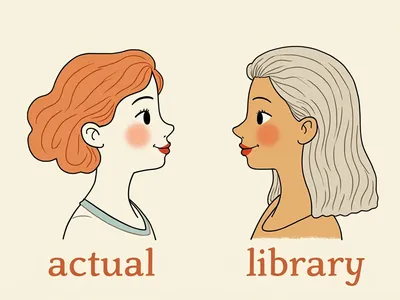
What are some common false friends between English and Romanian
Some common false friends between English and Romanian are words that look similar in both languages but have different meanings, which can cause misunderstandings for language learners and speakers. The biggest trap is that the forms often seem obvious, so the wrong meaning feels “safe” even when it is not.
Common English–Romanian false friends
False friends are especially common in English–Romanian vocabulary because Romanian has many Latin-based words that resemble English words, but the meanings have drifted apart. In everyday conversation, that can turn a simple sentence into something confusing, awkward, or unintentionally funny.
Examples of false friends include:
- English “eventually” means “in the end” but Romanian “eventual” means “possibly.”
- English “argument” means “reason for disagreement,” while Romanian “argument” can mean a “reason” but the disagreement is expressed by a different word.
- Words that appear borrowed from English in Romanian media or economic contexts sometimes function as false friends because their perceived meaning differs from English usage.
Why these words cause problems
The danger comes from similarity, not rarity. A learner may recognize a word instantly and skip checking it, which is exactly when false friends do the most damage.
A few patterns are especially common:
- Formal vocabulary: Business, legal, and academic words often look international but are not used in the same way.
- News and media language: Words borrowed into Romanian can sound modern or technical while still carrying a different local meaning.
- Everyday “easy” words: Short, familiar-looking terms can be the most misleading because they are assumed to be transparent.
In real conversation, a false friend can change the tone of a sentence. A speaker may sound uncertain, overly direct, or even say the opposite of what was intended.
High-value examples to memorize
eventually / eventual
English eventually means that something happens after some time, often after delays: “She eventually understood.” Romanian eventual means possible or if needed. A Romanian speaker may therefore read an English sentence with the wrong expectation, or produce a sentence that sounds off in English.
A safer English equivalent in Romanian contexts is often possible, perhaps, or in the end, depending on the meaning.
argument / argument
English argument most often means a disagreement or a heated discussion: “They had an argument.” Romanian argument can mean a reason, proof, or basis for a claim. The conflict sense in Romanian is usually expressed with another word, so the same-looking form does not carry the same conversational weight.
This is a frequent trap in essays, meetings, and translation, where the writer assumes the word has the same pragmatic meaning in both languages.
actual / actual
English actual means real or existing in fact. Romanian actual means current or present-day. So an English phrase like “the actual situation” is not the same as Romanian situația actuală, which means “the current situation.”
This pair is one of the most useful to learn early because it appears often in reports, workplace language, and headlines.
fabric / fabrică
English fabric means cloth material. Romanian fabrică means factory. A sentence like “a fabric of the city” can easily be misread if the Romanian meaning is assumed.
This is a classic example of why visual similarity is not enough. One letter can separate cloth from industry.
magazine / magazin
English magazine is a periodical publication. Romanian magazin usually means shop or store. In travel or shopping situations, this false friend can create immediate confusion, especially in signs and directions.
library / librărie
English library is a place for borrowing or reading books. Romanian librărie is a bookshop. The Romanian word for library is bibliotecă. This is one of the most practical false friends for beginners because it comes up in city life, study, and everyday errands.
sensible / sensibil
English sensible means practical or reasonable. Romanian sensibil means sensitive. A “sensible person” in English is not the same as a persoană sensibilă in Romanian.
False friends in media, business, and formal speech
False friends are particularly risky in professional settings because the surrounding vocabulary sounds precise, so errors are harder to notice. In negotiations, financial reporting, marketing, and public-facing writing, a single mistranslated word can make a statement sound more confident, more vague, or more negative than intended.
A common source of trouble is words that look international but follow Romanian usage rather than English usage. That can happen with technical terms, economic expressions, and loanwords from French or other European languages that entered Romanian with a different sense.
In practice, the safest approach is to treat lookalike words as suspicious until their meaning is checked in context. That habit is especially useful for speaking practice, where fast recall matters and active conversation practice tends to expose these mismatches faster than passive study.
How to avoid false-friend mistakes
A simple three-step habit helps:
-
Pause on any word that looks “too easy.”
Similar form is often a warning sign, not a guarantee. -
Check the meaning in a full sentence.
Many false friends only become obvious when the surrounding grammar and topic are considered. -
Learn the nearest natural equivalent, not just a dictionary gloss.
For example, English eventually is often better remembered as “in the end” than as a literal-looking cognate.
For speaking, it helps to practice short real-world sentences rather than isolated word lists. A word that is understood in a vocabulary test can still fail in conversation if its everyday use does not match the target language.
Quick reference: English vs Romanian meaning shifts
- eventually = in the end / after a delay; eventual = possible
- argument = disagreement; argument = reason, proof
- actual = real; actual = current
- fabric = cloth; fabrică = factory
- magazine = periodical; magazin = shop
- library = library; librărie = bookshop
- sensible = practical, reasonable; sensibil = sensitive
Why false friends matter for learners
False friends are not just translation traps. They affect fluency, comprehension, and confidence because they create misunderstandings that feel deceptively small. In conversation, that can mean choosing the wrong register, misunderstanding a reply, or missing a key detail in a workplace exchange.
The most effective habit is not memorizing a long list mechanically, but learning the few high-frequency traps that actually appear in speech, news, and daily life. Once those are internalized, Romanian becomes much easier to interpret accurately, especially in conversations where speed leaves little time to recover from a mistaken assumption.
References
-
Automatically Building a Multilingual Lexicon of False Friends With No Supervision
-
False friends in the romanian and english languages a comparative survey
-
Semantic Analysis of «False- Friends»: A Case Study of English and Siin Seereer
-
TRANSLATION OF FALSE FRIENDS AMONG B2 LEVEL ENGLISH LANGUAGE LEARNERS
-
“Relevance of the Cultural Transfer in Translation: False-friends in Media Sources”
-
Metaphor and Metonymy as a Source of False Friends in Spanish and Standard Modern Greek
-
“Bridge-uri, router-e si switch-uri”: On Romanian Computer Language
-
Linguistic Harbingers of Betrayal: A Case Study on an Online Strategy Game
-
Mutual Clustering Coefficient-based Suspicious-link Detection approach for Online Social Networks