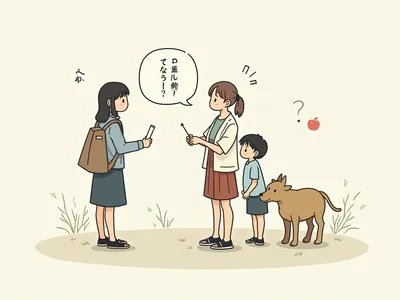
How do you ask for directions in Japanese
How to ask for directions in Japanese
To ask for directions in Japanese, polite phrases such as 「すみません、[place] はどこですか?」 (Sumimasen, [place] wa doko desu ka?) meaning “Excuse me, where is [place]?” are commonly used. Another useful pattern is 「すみません、[place] に行きたいです。どうやって行けますか?」 (Sumimasen, [place] ni ikitai desu. Douyatte ikemasu ka?) meaning “Excuse me, I want to go to [place]. How can I get there?” Other polite starters include 「ちょっといいですか?」 (Chotto ii desu ka?) to get someone’s attention gently. Key directional words include まっすぐ (massugu - straight), 右 (migi - right), and 左 (hidari - left) to understand or give directions clearly. For example, 「あの信号を左へ曲がってください」 means “Turn left at that traffic light”.
The most useful phrases
The simplest way to ask for a location is to name the place and use どこですか (doko desu ka?, “where is it?”). This works well for trains, stations, hotels, restaurants, shrines, and public buildings.
Common versions include:
- 駅はどこですか? — Where is the station?
- トイレはどこですか? — Where is the restroom?
- コンビニはどこですか? — Where is the convenience store?
- 東京駅はどこですか? — Where is Tokyo Station?
A small detail matters: は here marks the topic, so the structure sounds natural even when the place comes first. In speech, Japanese speakers often keep the question short and polite rather than adding extra explanation.
Useful sentence patterns
When the goal is to reach a destination, 行きたいです (ikitai desu, “want to go”) is a very practical phrase.
A natural pattern is:
- すみません、[place] に行きたいです。
Excuse me, I want to go to [place].
To ask for the route:
- どうやって行けますか?
How can I get there? - どう行けばいいですか?
How should I go?
Both are polite and common. どうやって asks about the method, while どう is shorter and often used in everyday conversation.
Another helpful phrase is:
- [place] はこの近くですか?
Is [place] nearby?
This is useful when the person may point rather than give a full route.
Polite ways to get attention
Japanese directions usually begin with a brief polite opener. The most common is:
- すみません — Excuse me / Sorry
This works in shops, on the street, at stations, and in most everyday situations. It is softer than abrupt English-style “Where is…?” and helps the request sound respectful.
Another gentle opener is:
- ちょっといいですか? — Could I bother you for a moment?
This is useful when interrupting someone who is walking, working, or talking.
Direction words that come up often
A few direction words cover a large number of real-life situations.
- まっすぐ (massugu) — straight
- 右 (migi) — right
- 左 (hidari) — left
- 曲がる (magaru) — to turn
- 交差点 (kōsaten) — intersection
- 信号 (shingō) — traffic light
- 次の角 (tsugi no kado) — the next corner
- 前 (mae) — front / ahead
- 後ろ (ushiro) — behind
A route description often sounds like:
- まっすぐ行ってください。 — Please go straight.
- 次の角を右に曲がってください。 — Please turn right at the next corner.
- あの信号を左へ曲がってください。 — Turn left at that traffic light.
The verb 曲がってください is especially useful because it appears in many directions from locals and signs.
How directions are often given in Japan
Directions in Japanese are frequently described from landmarks rather than exact distances. A person may say “go straight until the convenience store” or “turn at the traffic light,” because these reference points are easier to use on the street than street numbers alone.
Useful landmark phrases include:
- コンビニの前 — in front of the convenience store
- 駅の近く — near the station
- 橋の手前 — before the bridge
- 郵便局のとなり — next to the post office
In cities, people often rely on station exits, convenience stores, and crossings. In rural areas, the same landmark-based style still appears, but landmarks may be fewer and directions may be longer.
Pronunciation tips
Japanese direction words are short, but they can still be hard to catch in real speech.
A few useful pronunciation points:
- すみません is usually said quickly and smoothly, not with strong stress on each syllable.
- まっすぐ has a doubled consonant sound in the middle.
- 右 (migi) and 左 (hidari) are easy to mix up when listening, so the context matters.
- どうやって can sound fast in normal speech, especially in stations or busy streets.
Slow, clear pronunciation helps more than perfect grammar when asking for directions. In practice, listening and repeated speaking drills make these phrases easier to recognize under pressure.
Common mistakes
A common mistake is using overly direct English-style wording. In Japanese, adding すみません or ちょっといいですか makes the request more natural and polite.
Another mistake is relying only on a single word like どこ without enough context. 駅はどこですか? is clear, while just saying どこですか? can sound incomplete unless the place is already obvious.
Some learners also confuse 右 and 左, especially when a direction is given quickly. Repeating the landmark and the direction together helps: 信号を左 — left at the traffic light.
A simple formula
A reliable way to ask for directions is:
- すみません + [place] + はどこですか?
- すみません + [place] + に行きたいです。どうやって行けますか?
These two patterns cover most everyday situations. The first asks where something is. The second asks how to get there.
Quick examples
- すみません、渋谷駅はどこですか?
Excuse me, where is Shibuya Station? - すみません、ホテルに行きたいです。どうやって行けますか?
Excuse me, I want to go to the hotel. How can I get there? - ちょっといいですか? この近くに郵便局はありますか?
Could I ask something? Is there a post office near here?
Mini FAQ
Can directions be asked without full sentences?
Yes. In real conversation, short phrases are common, especially when paired with gestures or a map.
Is すみません enough to start?
Yes. It is one of the safest and most natural ways to get attention politely.
What if the answer is too fast?
Useful follow-up phrases are もう一度お願いします (“Please say it again”) and ゆっくりお願いします (“Please speak slowly”).
References
-
Giving and Asking for Directions: “Right” in Japanese & More
-
How to Ask For Directions In Japanese: 14 Key Phrases (With …