Are there any specific French words that are often confused with English words
There are indeed specific French words that are often confused with English words. These are typically known as “false friends” (faux amis), where words look or sound similar in both languages but have different meanings. For example:
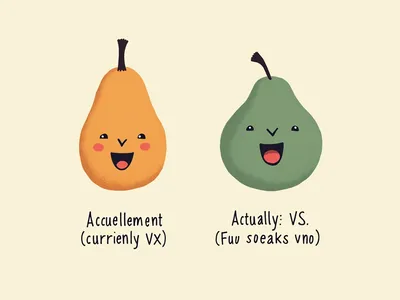
- “Actuellement” in French means “currently,” not “actually.”
- “Library” in English vs. “Librairie” in French, where the latter means “bookstore” not a library.
- “Monnaie” in French means “change” (coins), not “money” in general.
- “Sensible” in French means “sensitive,” not “sensible” in English.
- “Assisté” in French often means “attended” or “present,” not the English “assisted.”
These kinds of confusion arise because the words are cognates but have diverged in meaning across the two languages. This is a common phenomenon for English and French due to their intertwined histories.
Why Do False Friends Exist?
False friends often originate from shared Latin roots or from historical borrowing, but the meanings evolved differently in each language over time. English and French have influenced each other extensively since the Norman Conquest in 1066, which introduced a massive influx of French vocabulary into English. Although this created many cognates, natural semantic shifts caused divergence in meaning. This divergence leads to words that seem familiar but can cause misunderstandings if translated literally.
For language learners, distinguishing false friends is crucial for comprehension and clear communication. Misusing these words can lead to awkward situations or unintended meanings, so awareness is key.
Common Categories of False Friends in French and English
False friends often fall into certain semantic groups, which can help learners identify patterns and avoid mistakes:
1. Emotions and Descriptions
-
Sensible (French) vs. Sensible (English):
French “sensible” means “sensitive” or emotionally perceptive.
English “sensible” means “showing good judgment or practicality.” -
Sympathique (French) vs. Sympathetic (English):
French “sympathique” means “nice” or “friendly.”
English “sympathetic” means “feeling compassion or sorrow for others.”
2. Academic and Professional Terms
-
Actuellement (French): Currently, at the present time.
English “actually”: in fact or really. -
Éventuellement (French): Possibly or potentially.
English “eventually”: in the end, after some time.
3. Places and Objects
-
Librairie (French): Bookstore.
English “library”: a place to borrow books. -
Collège (French): Middle school or junior high.
English “college”: institution of higher education.
4. Financial Terms
-
Monnaie (French): Coins or small change.
English “money”: any form of currency. -
Actif (French): Assets or positive qualities.
English “active”: engaged in action or movement.
5. Verbs That Look Similar
-
Assister (French): To attend or be present at.
English “to assist”: to help or support. -
Préserver (French): To preserve or protect.
English “to preserve”: more similar, but beware of nuanced contexts.
How to Recognize and Avoid False Friends
Step 1: Understand the Context
Always consider the context in which the word is used. The same word can often be translated differently depending on the situation.
Step 2: Learn Word Families and Root Meanings
Exploring etymology can help clarify why words have different meanings. For example, the French “actuellement” derives from Latin ‘actualis’ meaning ‘active,’ but evolved into the sense of ‘current time’.
Step 3: Use Reliable Bilingual Dictionaries
Good dictionaries will often flag false friends or provide multiple meanings with context notes.
Step 4: Practice With Examples
Using false friends in sentences and receiving corrective feedback helps internalize correct meanings.
Examples of Miscommunications Caused by False Friends
A common scenario is at a French restaurant where an English speaker asks for the “entrée” expecting a starter, but in French, “entrée” means the main course. This can cause confusion in ordering meals.
Similarly, saying “Je suis sensible” to mean “I am sensible” will be understood as “I am sensitive,” which may not convey the speaker’s intended meaning.
Additional Useful False Friends List
| French | English | French Meaning | English Meaning |
|---|---|---|---|
| Actuellement | Actually | Currently | In fact, really |
| Blesser | Bless | To injure or hurt | To confer a blessing |
| Demander | Demand | To ask | To require forcefully |
| Prune | Prune | Plum | Dried plum |
| Rentrée | Rent | Return (to school) | Payment for leasing |
| Librairie | Library | Bookstore | Place to borrow books |
| Pain | Pain | Bread | Physical suffering |
| Collège | College | Middle school | University-level education |
| Sombre | Somber | Dark | Gloomy or depressing |
Knowing these can prevent everyday misunderstandings for learners.
Why Mastering False Friends Matters for Polyglots
For polyglots learning multiple languages, recognizing false friends between French and English is vital because:
- It strengthens overall vocabulary understanding by clarifying subtle semantic differences.
- It builds confidence in communication by reducing errors caused by assumptions.
- It enhances translation skills by encouraging precise word choice.
- It aids in quickly identifying when a word is a potential trap.
By systematically studying false friends, language learners move beyond superficial similarities and deepen their mastery of French vocabulary in relation to English.
References
-
Dissociated mechanisms for phonetic and lexical learning in a second language
-
The Phenomenon of Loan Words That Often Used in Social Media
-
Visual words in notes English language SDN Layungsari 2 Bogor City
-
Cross-cultural Study of the Concepts of “Shame” and “Guilt” in English and Romanian
-
Linguistic Aspects of Translation Between French and English
-
ANGLICISMS IN THE FRENCH LANGUAGE: LINGUISTIC AND SOCIAL ASPECTS
-
Au-delà des genres: décalages stylistiques entre l’anglais et le français
-
Teenagers’ Attitudes Towards Franglais in France and Francophone Switzerland
-
Exploring the Influence of French on the Pronunciation of the Letter h in English Words
-
Indeterminacy in L1 French grammars: the case of gender and number agreement